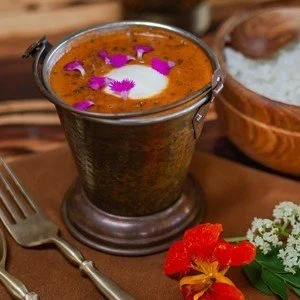
Butter Chicken usually gets the attention. It's creamy, familiar, and often the first thing people look for on an Indian restaurant menu.
But there's another dish worth talking about, especially if you're vegetarian.
It's called Dal Makhani with Burrata.
Yes, burrata. The soft Italian cheese you might recognise from restaurant salads and pasta dishes has found its way onto a slow-cooked Indian lentil curry.
At Pesona Lounge Ubud, the dish combines black lentils with fresh burrata, bringing two very different culinary traditions onto one plate.
And unlike many fusion dishes that rely on an unexpected name, there's a fairly interesting reason this combination makes sense.
It starts with the lentils.
What Is Dal Makhani?
Dal Makhani is a traditional North Indian dish made primarily with whole black lentils, slowly cooked until they develop a soft, rich consistency. Traditional recipes often include butter, cream, spices, and kidney beans.
The name gives away part of its character.
Dal refers to pulses such as lentils, while makhani means buttery.
It's a dish closely associated with Punjabi cooking, known for its slow preparation and rich texture.
Unlike some lighter lentil dishes, Dal Makhani develops its character through cooking the lentils until they soften and the mixture becomes cohesive.
That takes time.
The exact preparation varies between kitchens, of course. Some versions are considerably richer than others, and different recipes use different quantities of butter, cream, and seasoning.
At Pesona Lounge Ubud, the published menu describes Dal Makhani with Burrata as slow-cooked black lentils finished with fresh burrata.
And that final ingredient is where Pesona's version takes a different direction.
Wait, What's Burrata Doing on an Indian Curry?
Good question.
Burrata is a fresh Italian cheese traditionally associated with Puglia in southern Italy.
At first glance, it resembles a ball of mozzarella. But slice into burrata and you'll discover a softer, creamier centre made with strands of cheese and cream.
It's known for a mild dairy flavour and a distinctive combination of textures.
Now think about Dal Makhani.
You've already got slow-cooked lentils with a rich, soft consistency. Add burrata and you're introducing another creamy element, but with the characteristic texture of fresh cheese.
Rather than replacing the lentils or changing the curry into something entirely different, burrata becomes a finishing ingredient.
Why Does the Combination Make Sense?
Here's the thing.
Traditional Dal Makhani already has a strong relationship with dairy. Butter and cream are common ingredients in many preparations.
Burrata introduces a different dairy texture to that familiar flavour direction.
The lentils remain the foundation of the dish, while the cheese provides a contrasting finishing element.
It's an example of fusion cooking that builds on the existing character of a dish rather than disguising it.
And for anyone who's used to seeing burrata served with tomatoes and olive oil, finding it on an Indian lentil curry is a rather unexpected change.
What Makes Pesona's Dal Makhani with Burrata Different?
At Pesona Lounge Ubud, Dal Makhani with Burrata appears in the Plant Powered Curry section of the menu.
The restaurant identifies two central components:
Slow-cooked black lentils
Fresh burrata cheese
There's no chicken or lamb in the published description.
But unlike vegetable dishes that rely mainly on tomato-based gravy, this one centres on lentils.
That distinction matters when you're deciding what to eat.
Lentils provide the substance of the dish, while burrata adds the finishing dairy element.
Pesona also serves other vegetarian Indian dishes, including Paneer Masala, Saag Paneer, Chole Masala, Aloo Gobi, and Mung Dal Tadka.
Each offers a different approach to meat-free Indian food.
And that brings up an important question.
Is Dal Makhani with Burrata the Same as Paneer Curry?
No. Although both involve dairy ingredients, they're quite different dishes.
Paneer is a fresh Indian cheese that generally holds its shape during cooking.
In Paneer Masala, for example, pieces of paneer are served in a spiced tomato gravy.
Dal Makhani with Burrata works differently.
The black lentils form the main body of the dish, while burrata is used as a finishing ingredient.
So, if you're choosing between the two, think about which texture you're more interested in.
Choose Paneer Masala if you want distinct pieces of Indian cheese in a tomato-based curry.
Consider Dal Makhani with Burrata if you're more interested in a slow-cooked lentil dish finished with creamy fresh cheese.
Curious about paneer itself? Our guide to Indian paneer explains its texture, preparation, and how it differs from other ingredients.
Dal Makhani with Burrata vs Burrata Butter Chicken
Now, here's where things get interesting.
If you've browsed Pesona Lounge's menu before, you might have noticed another dish featuring burrata.
Burrata Butter Chicken.
The two dishes share a finishing ingredient, but they shouldn't be mistaken for variations of the same curry.
Burrata Butter Chicken
Pesona's Burrata Butter Chicken features chicken in a rich butter chicken sauce, finished with creamy burrata.
The chicken is the main protein, while the tomato-based butter sauce provides the characteristic curry flavour.
It's a meat-based dish.
Dal Makhani with Burrata
Dal Makhani takes a different approach.
Instead of chicken, the centre of the dish is slow-cooked black lentils.
The fresh burrata finishes a lentil preparation rather than a chicken curry.
For vegetarian diners, that's an important difference.
It also shows how Pesona uses the same ingredient across two distinct Indian dishes without making them taste or function exactly the same way.
If you're unfamiliar with butter chicken, our guide to Butter Chicken and Pesona's burrata variation explains the traditional dish and its modern interpretation.
What Should You Eat with Dal Makhani with Burrata?
Okay, now that you've decided on the curry, let's talk about what goes with it.
This is one detail worth checking before ordering extras.
Pesona Lounge Ubud's published menu states that its Plant Powered Curries are served with local rice.
That includes the section where Dal Makhani with Burrata appears.
So you don't need to assume that basmati rice is included, or automatically order another rice portion.
The menu lists Aromatic Plain Basmati separately.
Local Rice: The Included Accompaniment
Local Indonesian rice is served with the curry according to the menu.
It's a straightforward accompaniment that allows the lentil dish to remain the focus.
If you prefer eating your curry with a spoon and rice, there's nothing complicated to arrange.
Butter Naan: For Something Soft and Familiar
Prefer bread?
Butter Naan is another option.
Pesona's menu describes it as soft naan brushed with ghee and cooked in the tandoor.
It's a useful accompaniment for a lentil curry because you can tear the bread into smaller pieces and use it to gather the dal.
And since the curry already has a rich dairy element, simple bread may be all you need.
Garlic Naan: If You Want Another Savoury Element
Garlic Naan is another option on the menu.
It adds garlic flavour to the bread, offering a different combination from plain or butter naan.
Neither pairing is automatically better.
It's simply a question of whether you want your bread to stay relatively neutral or contribute another savoury flavour.
For more ideas, read our practical guide to eating naan with Indian curry.
Is Dal Makhani with Burrata Vegetarian or Vegan?
Here's an important distinction.
Dal Makhani with Burrata is listed among Pesona's plant-focused curries and contains no meat in its published description.
However, it is not vegan.
Burrata is a dairy cheese made from milk and cream.
Guests following a strict vegetarian diet should also confirm the burrata's cheese-making ingredients, including the type of coagulant or rennet used, if that matters to their dietary practice.
And if you're dairy-free, the regular dish isn't suitable because burrata contains milk.
What If You're Looking for a Vegan Lentil Curry?
Pesona Lounge Ubud also serves Mung Dal Tadka.
The menu describes this as silky lentils tempered with garlic, cumin, and dried chilli.
It's a different preparation from Dal Makhani with Burrata and may be worth discussing with the team if you're seeking a plant-based option.
Always confirm the current ingredients and cooking fats when following a strict vegan diet.
For more meat-free choices, explore our vegetarian and vegan dining guide in Ubud.
Is Dal Makhani Always Spicy?
No. Dal Makhani isn't automatically a very spicy dish.
Traditional preparations use aromatic spices, but the amount of chilli depends on the recipe.
The word makhani refers to the buttery style of the dish, not its heat level.
At Pesona Lounge Ubud, the menu doesn't specify a numerical spice rating for Dal Makhani with Burrata.
If you're sensitive to chilli, tell the team before ordering and ask about the current preparation.
It's also worth remembering that a creamy texture doesn't necessarily mean a dish contains no chilli.
Where Can You Try Dal Makhani with Burrata in Ubud?
You'll find the dish on the menu at Pesona Lounge Ubud, located on Jalan Goutama Selatan No. 25A in central Ubud, Bali.
The restaurant serves Indian cuisine, including tandoori dishes, biryani, vegetarian curries, freshly prepared naan, and several signature creations featuring burrata.
Dal Makhani with Burrata is a particularly interesting choice if you want to explore Indian food beyond the familiar chicken curries.
And if you're dining with friends who have different preferences, there's no need for everyone to order the same style of food.
One person can choose a lentil curry, another can order a tandoor dish, and someone else might prefer Paneer Masala or biryani.
Before visiting specifically for this dish, check the current Pesona Lounge Ubud menu or contact the team to confirm availability.
Frequently Asked Questions
What is Dal Makhani with Burrata?
Dal Makhani with Burrata is Pesona Lounge Ubud's version of the traditional North Indian black lentil dish, finished with fresh Italian burrata cheese. The combination brings together slow-cooked lentils and a creamy dairy topping.
Does Pesona Lounge Ubud serve Dal Makhani with Burrata?
Yes. It appears in the Plant Powered Curry section of the restaurant's published menu, described as slow-cooked black lentils finished with fresh burrata.
Is Dal Makhani with Burrata vegan?
No. Burrata contains dairy, so the standard dish is not vegan. Guests with strict vegetarian requirements should also confirm the cheese's coagulant ingredients.
Does Dal Makhani with Burrata come with rice?
Pesona Lounge Ubud's Plant Powered Curries are listed as being served with local Indonesian rice. Aromatic Plain Basmati is a separate menu item.
What's the difference between Dal Makhani with Burrata and Burrata Butter Chicken?
Dal Makhani with Burrata is based on slow-cooked black lentils, while Burrata Butter Chicken contains chicken in a rich butter chicken sauce. Both feature burrata but have different main ingredients and preparations.
So, Would You Try Burrata on Dal Makhani?
There's a reason traditional Dal Makhani has remained a favourite in Indian cooking.
Slow-cooked lentils, aromatic seasoning, and a rich consistency make it a substantial dish in its own right.
At Pesona Lounge Ubud, fresh burrata introduces an Italian ingredient without replacing the lentils that define the original.
It's a different way to explore an Indian classic, particularly if you're vegetarian and curious about the restaurant's signature creations.
And if you've only ever ordered burrata with Butter Chicken?
Well, now you have another reason to look at the vegetarian curry section.
Explore the Pesona Lounge Ubud menu to see what's currently available.