What Is Biryani? Why It’s More Than Just Spiced Rice
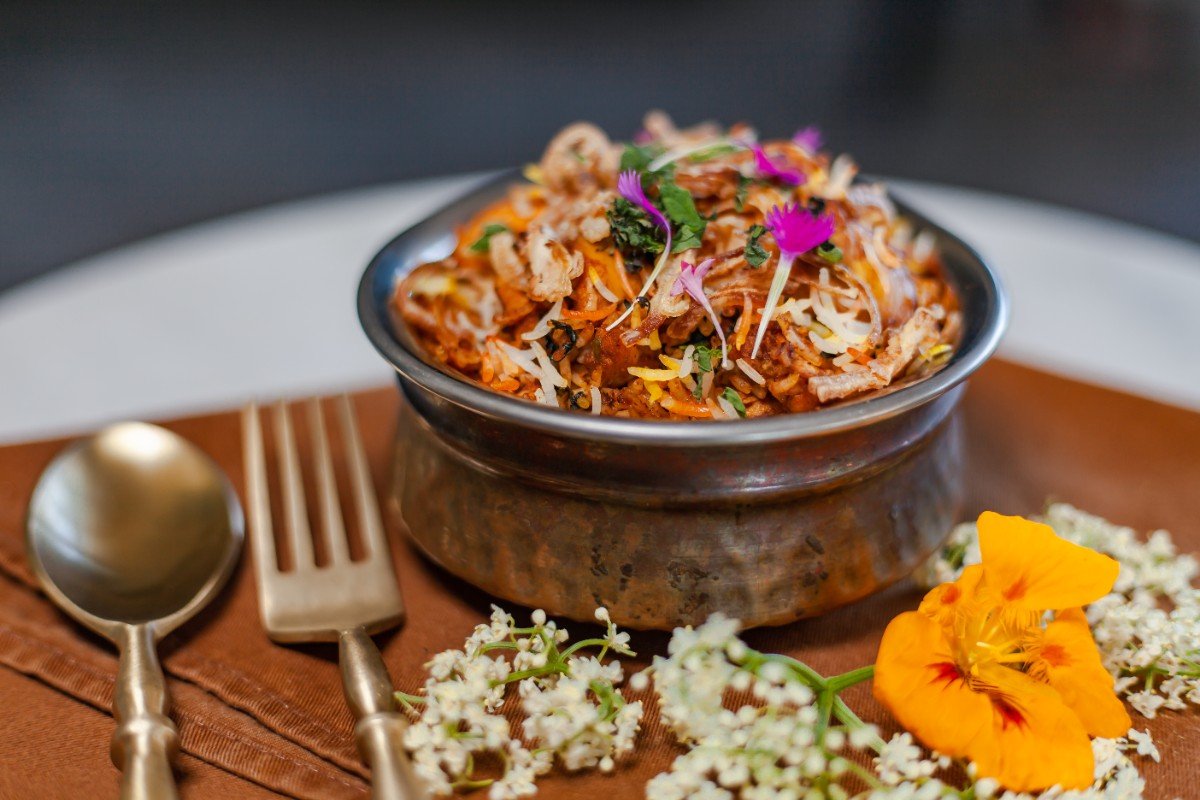
Biryani is a layered rice dish in which rice, spices, aromatics, and usually meat or vegetables are brought together so their flavours develop as part of the same dish.
That is what makes biryani different from simply putting curry on top of rice.
Depending on the regional style, the rice may be layered with chicken, lamb, vegetables or seafood, while ingredients such as whole spices, herbs, fried onions, yoghurt or saffron can add further aroma and depth. Recipes vary enormously, so there is no single formula that represents every biryani.
For someone ordering biryani for the first time, the easiest way to understand it is this: the rice is not just a side dish. It is the centre of the dish.
What Is Biryani?
Biryani is a South Asian rice dish recognised for its use of layered flavours, aromatic rice and carefully cooked meat or vegetables.
Rather than preparing plain rice and adding a sauce afterwards, many biryani methods bring partially cooked rice together with seasoned meat or vegetables before a final stage of cooking. This allows steam, spices and aromatics to move through the layers while the rice finishes cooking.
There are many regional biryanis across India and the wider subcontinent, and the differences can be substantial.
Some are bold and heavily aromatic. Others are comparatively delicate. Some use long-grain basmati rice, while regional traditions in southern India may use shorter varieties such as jeerakasala or seeraga samba.
That variety matters because biryani is better understood as a family of rice dishes than one fixed recipe. Saveur’s regional guide to biryani
If you are new to Indian cuisine generally, our Indian Food in Ubud: A Practical Dining Guide explains some of the different dishes and regional styles you may encounter on an Indian menu.
Why Is Biryani More Than Just Spiced Rice?
Adding cumin, cardamom or chilli to cooked rice can certainly make seasoned rice.
That alone does not create biryani.
What gives many biryanis their character is the way the components are prepared, layered and finished together.
Imagine plain basmati rice beside a bowl of curry. The rice and curry were cooked independently, and you combine them on your plate.
With layered biryani, rice may be partially cooked first, then arranged with seasoned chicken, lamb or vegetables, herbs and aromatics before the final cooking stage.
During that final stage, steam carries aroma through the pot. The rice near one layer may absorb more of the meat or vegetable mixture, while another section remains lighter and more fragrant.
That means each spoonful does not necessarily taste exactly the same.
This variation is part of the point.
What Is Biryani Made From?
There is no universal ingredient list, but biryani commonly combines several building blocks.
Rice
Rice forms the structure of the dish.
Basmati is one of the best-known choices because its long grains can remain distinct when cooked carefully and it brings its own aroma.
However, not every authentic biryani uses basmati. Regional varieties across India use different local rice depending on the style being prepared.
Meat or Vegetables
Chicken, lamb or mutton are common, but biryani can also be prepared with vegetables, seafood and other proteins.
The main ingredient affects more than the name.
Chicken, lamb and vegetables release different amounts of moisture and bring different flavours to the rice, so the cooking method often needs to account for those differences.
Spices and Aromatics
Depending on the recipe, biryani may contain whole or ground spices such as cardamom, cloves, cinnamon, cumin and other aromatic seasonings.
Fresh herbs, fried onions, ginger, garlic, saffron and other ingredients can also appear.
The important point is that spices are not there simply to make biryani hot.
They are used to create aroma and layers of flavour.
If chilli heat is something you worry about when ordering Indian food, our guide to How Spicy Is Indian Food? explains the difference between food that is spiced and food that is genuinely spicy.
Why Does Basmati Rice Work So Well in Biryani?
Basmati is strongly associated with many famous biryani styles because of its long grain, fragrance and ability to remain relatively separate when cooked correctly.
That separation is particularly useful in layered biryani.
Instead of becoming one soft mass, individual grains can carry aroma while keeping their own texture.
However, it would be inaccurate to say that biryani must use basmati.
Some South Indian biryanis traditionally use rice such as jeerakasala, also known as kaima rice, or seeraga samba. These varieties produce a different texture and eating experience while still belonging to established biryani traditions.
At Pesona Lounge Ubud, the current Chicken Biryani and Lamb Biryani are described on the menu as classic layered basmati rice preparations with aromatic spices.
What Does Biryani Taste Like?
Biryani is usually aromatic before it is intensely hot.
Depending on the recipe, you might notice warm whole spices, savoury meat, herbs, caramelised onion, yoghurt, saffron or other aromatics.
But there is no single “biryani flavour”.
A Hyderabadi-style biryani can be very different from a biryani from Kolkata, Lucknow, Kerala or Tamil Nadu.
Even the rice varies between regions.
That is why describing biryani simply as “spicy rice” misses much of what makes the dish interesting.
The experience comes from aroma, texture, seasoning and the way the individual layers interact.
Is Biryani Spicy?
It can be, but it does not have to be.
The word “spiced” is more useful here than “spicy”.
Cardamom, cloves, cinnamon and cumin can create a very fragrant biryani without delivering the burning sensation associated with chilli.
Other recipes can be considerably hotter.
Regional style, recipe and the amount of chilli used all affect the final heat level.
If you are trying biryani in Ubud and are sensitive to chilli, asking the restaurant about its particular preparation is more reliable than assuming every biryani will have the same spice level.
What Is Dum Biryani?
“Dum” refers to a cooking technique in which food is enclosed so steam and aroma remain trapped during cooking.
In traditional dum preparations, the cooking vessel may be tightly covered and sealed, historically including methods that use dough around the edge of the lid.
Inside, the rice and other ingredients continue cooking gently in the trapped steam.
This is particularly useful for biryani because it allows the different layers to finish together without repeatedly opening the pot and releasing their aroma.
You can read more about this and other techniques in our guide to Traditional Indian Cooking Methods.
It is also important not to assume that every biryani is prepared through exactly the same dum technique. Biryani traditions include multiple cooking methods, including styles where ingredients are cooked to different stages before being layered and finished together.
Biryani vs Rice and Curry: What Is the Difference?
This is probably the easiest comparison for a first-time diner.
With rice and curry, the components normally remain separate until you combine them on your plate.
You might have steamed rice in one bowl and a chicken curry in another.
With biryani, the rice is part of the preparation itself.
The rice, spices, aromatics and main ingredients are assembled so they influence one another during cooking.
This is why pouring curry onto basmati rice does not create biryani.
Both can make excellent meals, but the cooking logic is different.
Biryani vs Pulao: Are They the Same?
The boundary is not always as simple as internet definitions suggest.
Both biryani and pulao have long histories, and recipes vary considerably across regions.
One commonly used distinction is that many biryani preparations involve partially or separately cooked rice being layered with other ingredients before a final cooking stage, while pulao often cooks rice more directly with stock and its other ingredients.
But historical recipes do not always fit neatly into modern categories.
Even the history of biryani contains competing stories. Food historians have challenged several popular origin stories about queens, armies and royal kitchens because contemporary evidence is limited.
For a diner, the more useful lesson is simple: do not expect every biryani—or every pulao—to follow one universal recipe.
Chicken, Lamb or Vegetable Biryani: Which Should You Choose?
The best choice depends more on the flavour and texture you want than on which version is supposedly the most “authentic”.
Chicken Biryani
Chicken tends to give biryani a lighter meat character than lamb.
Because chicken absorbs seasoning well without dominating the rice, it can be an approachable choice for someone ordering biryani for the first time.
At Pesona Lounge Ubud, Chicken Biryani is currently described as classic layered basmati rice with tender chicken and aromatic spices.
Lamb Biryani
Lamb brings a richer and more pronounced meat flavour.
That can work particularly well if you enjoy rice dishes with a deeper savoury character.
Pesona's current Lamb Biryani also uses layered basmati rice, paired with tender lamb and aromatic spices.
Vegetable Biryani
A vegetable biryani should not simply feel like the meat has been removed.
Vegetables contribute their own sweetness, moisture and texture, which changes how the rice eats.
At Pesona Lounge Ubud, the current Vegetable Dum Biryani takes a different approach from the chicken and lamb versions: it is sealed in pastry, baked, unveiled tableside and served with dahi.
You can see all three on the current Pesona Lounge Ubud menu.
Why Is Biryani Often Served with Raita or Dahi?
Biryani already contains a lot of aroma and seasoning, so a yoghurt-based accompaniment creates useful contrast.
Dahi is yoghurt.
Raita is a yoghurt-based accompaniment that may include vegetables, herbs, spices or other seasonings depending on the recipe.
Their cool, creamy texture contrasts with warm rice and aromatic spices. If a biryani contains chilli, yoghurt can also make each mouthful feel less intense.
However, raita is not a compulsory ingredient that defines biryani.
Different regional traditions serve biryani with different sides, including yoghurt preparations, salan, pickles or salads.
At Pesona specifically, the Vegetable Dum Biryani is listed with dahi, while House Masala Raita is available separately on the menu.
How Should You Eat Biryani?
You do not need a special technique.
Start by tasting a small amount without adding anything.
That gives you a chance to notice the rice, aroma and seasoning on their own.
Then try it with whichever accompaniment is served alongside it.
A few practical tips help:
Do not immediately mix everything aggressively. Try a few sections first so you can notice how the layers differ.
Taste the rice as well as the meat or vegetables. In good biryani, rice is not filler.
Add yoghurt or raita gradually. You can always add more, but once the rice is completely coated you lose some of its original texture.
Expect variation. One spoonful may contain more meat, herbs or spice than another.
Biryani is meant to feel layered rather than perfectly uniform.
Is Biryani a Complete Meal?
It can be.
Because it already combines rice with meat or vegetables and significant seasoning, biryani does not need curry poured over it to become a complete dish.
A yoghurt-based accompaniment or salad may be enough.
That said, Indian meals are often shared, so biryani can also sit alongside curries, tandoori dishes and other plates.
If you are ordering for several people, combining one biryani with a curry, grilled dish and vegetable or lentil dish can give the table a wider range of textures without ordering several similar rice dishes.
Trying Biryani in Ubud
If you are searching for biryani in Ubud, it helps to look beyond whether a restaurant simply has the word “biryani” on its menu.
Consider what type of rice is used, whether the dish is layered, what protein or vegetables are included, and what comes alongside it.
At Pesona Lounge Ubud, the current menu offers three different routes into the dish:
Chicken Biryani — layered basmati rice with tender chicken and aromatic spices
Lamb Biryani — layered basmati rice with tender lamb and aromatic spices
Vegetable Dum Biryani — sealed in pastry, baked, unveiled tableside and served with dahi
Those differences also make biryani useful for understanding Indian food more broadly.
It is not simply rice carrying the flavour of another dish.
The rice, aroma, seasoning, main ingredients and cooking method all belong to the same idea.
And that is why biryani is much more than spiced rice.
Frequently Asked Questions
What is biryani?
Biryani is a layered South Asian rice dish commonly prepared with aromatic rice, spices and meat or vegetables. Many styles bring partially cooked rice together with other ingredients before a final stage of cooking so their flavours develop together.
What is biryani made of?
Ingredients vary by region and recipe, but biryani commonly includes rice, spices, aromatics and chicken, lamb, vegetables, seafood or another main ingredient.
Is biryani just rice with curry?
No. Rice and curry are normally prepared as separate components. In biryani, the rice is part of the dish itself and is cooked or finished together with its other layers.
Does biryani always use basmati rice?
No. Basmati is widely used, but several regional biryanis use other varieties, including jeerakasala or kaima rice and seeraga samba.
What is dum biryani?
Dum biryani uses a sealed cooking method designed to trap steam and aroma while the rice and other ingredients finish cooking together.
Is biryani very spicy?
Not necessarily. Biryani can contain many aromatic spices without being intensely hot. Chilli level varies by recipe and regional style.
What is the difference between chicken and lamb biryani?
Chicken generally creates a lighter meat flavour, while lamb tends to be richer and more pronounced. The exact taste depends heavily on seasoning and cooking style.
Can biryani be vegetarian?
Yes. Vegetable biryani is widely prepared, although recipes and techniques vary between regions and restaurants.
What do you eat with biryani?
Common accompaniments include yoghurt, raita, salads, pickles and regional sauces. What is served depends on the type of biryani and local tradition.
Where can I try biryani in Ubud?
Several Indian restaurants in Ubud serve biryani. Pesona Lounge Ubud currently offers Chicken Biryani, Lamb Biryani and Vegetable Dum Biryani, giving diners three different preparations to choose from.