Indian food can be suitable for Muslim diners, but Indian cuisine is not automatically halal simply because a dish contains chicken, lamb, vegetables or no pork.
For Muslim travellers, the more useful question is how the food is sourced, prepared and handled.
Does the restaurant serve pork? Is alcohol used in cooking? How are ingredients handled in the kitchen? And does the restaurant hold formal halal certification?
These questions are different, and understanding the difference between halal-friendly practices and halal certification can make dining decisions much clearer.
Indian cuisine offers many possibilities, from lentil curries and vegetable dishes to tandoori chicken and biryani. But the name of a dish alone cannot confirm its halal status.
Here is what Muslim travellers should consider before ordering.
Indian Cuisine Is a Cooking Tradition, Not a Halal Certification
Indian cuisine includes an enormous range of regional traditions, ingredients and cooking methods.
Dal, biryani, tandoori chicken, vegetable curry and paneer dishes may all be Indian food, but they are prepared in very different ways.
That is why asking whether all Indian food is halal does not have a simple yes-or-no answer.
The ingredients matter.
The source of meat matters.
How the food is handled matters.
Whether alcohol is used in cooking matters.
And formal halal certification is a separate consideration.
A restaurant can follow practices designed to accommodate Muslim diners while not being formally halal-certified.
That distinction is especially useful when travelling in destinations such as Bali, where restaurants serve guests with many different dietary and religious requirements.
Halal-Friendly and Halal-Certified Are Not the Same Thing
This is the most important distinction to understand.
A halal-certified restaurant has gone through a formal certification process and holds recognised halal certification.
A halal-friendly restaurant, on the other hand, may follow practices intended to make dining more suitable for Muslim guests but does not claim to hold that formal certification.
Halal-friendly practices may include things such as:
not serving pork,
not using alcohol as an ingredient in food,
using carefully selected ingredients,
maintaining clean and hygienic food preparation,
and providing clear information to guests about how dishes are prepared.
These practices can help Muslim diners make an informed decision, but they should not be confused with formal halal certification.
This is why transparency matters.
Rather than using certification language when no certificate exists, restaurants should explain their actual practices and allow each guest to decide whether those practices meet their personal requirements.
What Should Muslim Travellers Check When Ordering Indian Food?
The dish name is only the starting point.
Several practical questions can give you much more useful information.
Check Whether Pork Is Used
For many Muslim diners, this is one of the first questions.
A restaurant may serve chicken, lamb, fish and vegetarian food while also serving pork elsewhere on the menu.
It is therefore better to ask rather than assume.
At Pesona Lounge Ubud, pork is not served.
That is part of our halal-friendly approach, but we do not present this fact as proof of formal halal certification.
Ask Whether Alcohol Is Used in Cooking
A restaurant serving alcoholic beverages does not necessarily use alcohol in its food.
These are two different things.
Indian cooking traditionally relies heavily on spices, yoghurt, tomatoes, coconut, herbs, butter, ghee and other ingredients rather than alcohol.
However, recipes and preparation can vary between restaurants.
At Pesona Lounge Ubud, alcohol is not used as an ingredient in our food preparation.
Alcoholic beverages are available separately from the bar.
We communicate these two facts separately so Muslim guests can make their own informed decision.
Consider How Food Is Prepared and Handled
For some Muslim travellers, ingredients are the main concern.
Others also want to know how food is stored, prepared and handled.
Cleanliness and hygienic kitchen practices are important for every restaurant, regardless of dietary requirements.
At Pesona Lounge Ubud, we place importance on careful food handling, kitchen cleanliness and hygienic preparation.
These practices form part of the way we approach halal-friendly dining.
However, hygiene itself should not be confused with formal halal certification.
A clean kitchen is an important food-safety practice, while halal certification is a separate formal process.
Meat Sourcing Still Matters
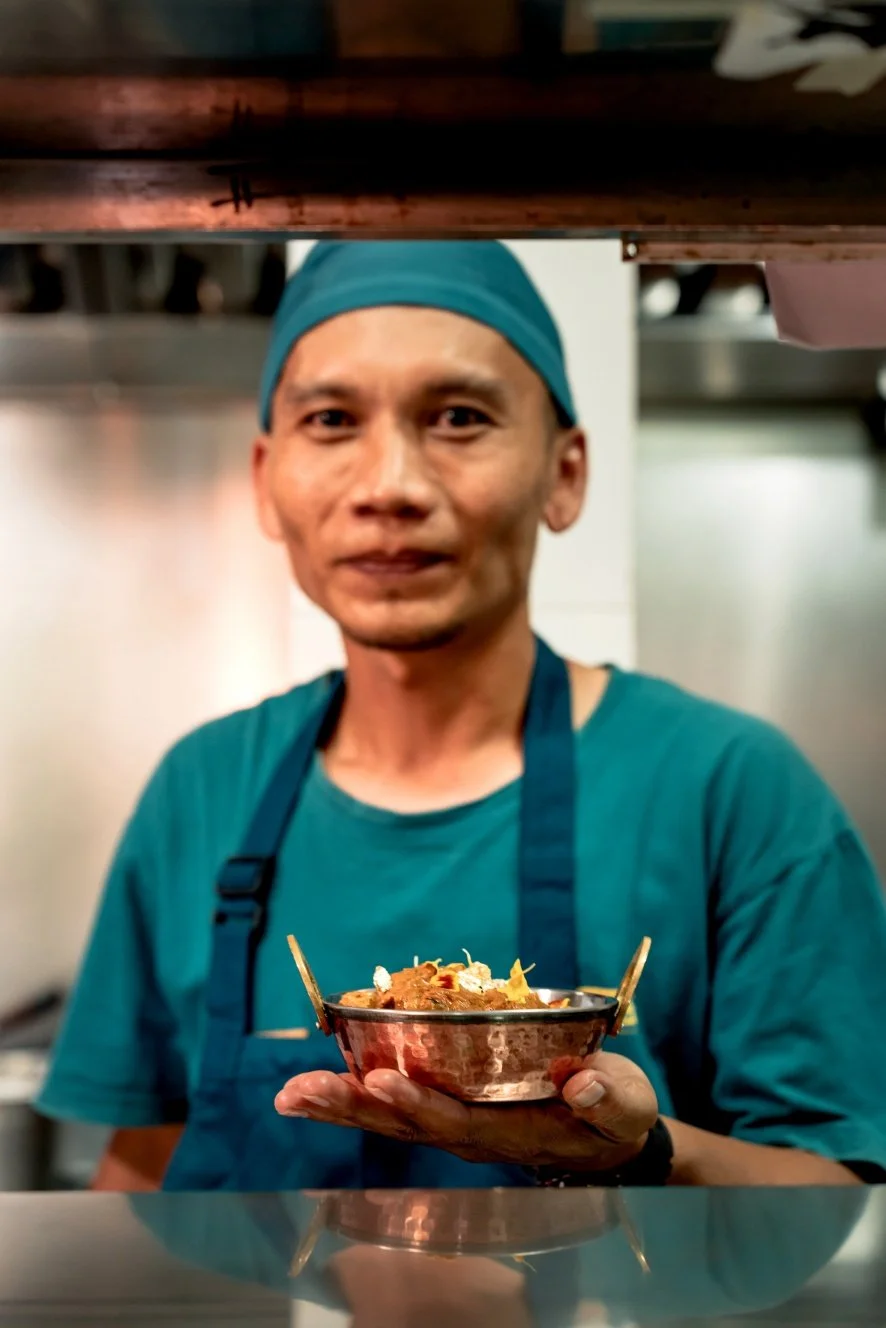
For dishes containing chicken, lamb or beef, diners may also want to understand how the meat is sourced.
Chicken Tikka, Lamb Seekh, Chicken Biryani and meat curries may all be suitable possibilities, but the name of the dish itself does not determine halal status.
If halal sourcing is important to you, it is reasonable to ask the restaurant about its current meat suppliers and ingredient sourcing.
Restaurant suppliers can change, so current information is always more useful than assumptions based only on a menu description.
Does Pork-Free Mean Halal?
Not automatically.
A restaurant can be pork-free without being halal-certified.
Avoiding pork addresses one important consideration, but Muslim diners may also care about:
meat sourcing,
ingredients used in sauces and marinades,
alcohol in cooking,
food handling,
and formal certification.
This is why Pesona Lounge Ubud uses the description halal-friendly rather than halal-certified.
We want guests to understand our practices accurately rather than interpret a pork-free menu as a certification claim.
For a wider overview of these distinctions when dining around town, read our guide to halal-friendly restaurants in Ubud.
Are Vegetarian Indian Dishes Automatically Halal?
Vegetarian dishes can make dining easier for guests who prefer to avoid questions surrounding meat sourcing, but vegetarian and halal are still different concepts.
Indian cuisine has a particularly strong vegetarian tradition.
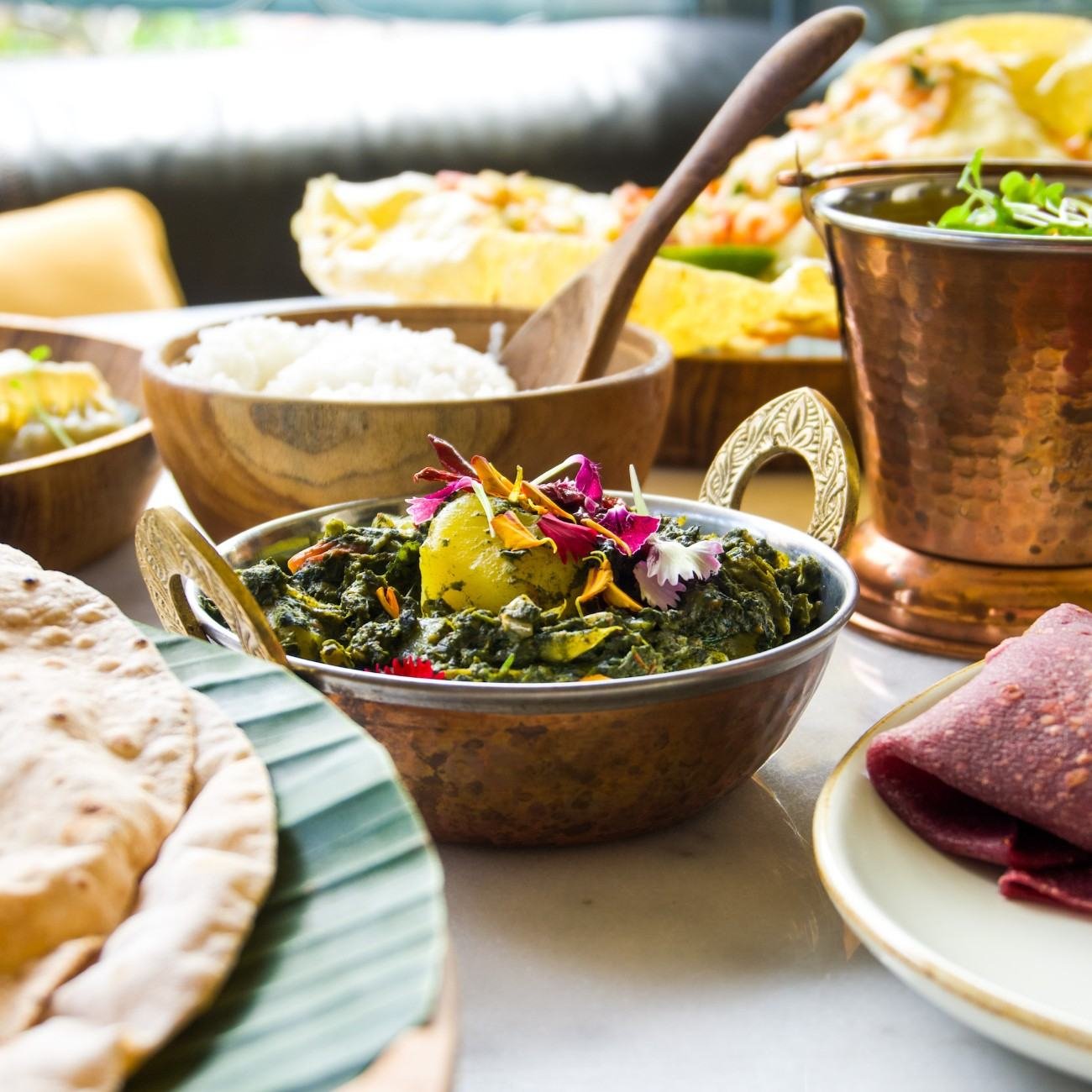
At Pesona Lounge Ubud, the current menu includes dishes such as Mung Dal Tadka, Aloo Gobi, Chole Masala, Saag Aloo, Paneer Masala and Vegetable Dum Biryani.
These dishes demonstrate how Indian cooking can build flavour through lentils, chickpeas, vegetables, herbs and spices rather than meat.
However, vegetarian does not mean vegan either.
Paneer is a dairy product, while yoghurt, butter and ghee are commonly used in Indian cooking.
Guests with vegan, dairy-free or other dietary requirements should therefore ask separately about the ingredients in individual dishes.
Our practical guide to Indian food in Ubud explains these differences in more detail.
What About Chicken Tikka, Lamb and Biryani?
Cooking style does not determine halal status.
Tandoori describes a cooking method.
Biryani describes a seasoned rice preparation.
Curry describes a broad family of dishes.
At Pesona Lounge Ubud, our menu includes Chicken Tikka, Lamb Seekh, Chicken Biryani, Lamb Biryani and several meat curries.
Muslim diners who want additional reassurance can speak with our team before ordering and ask about current ingredients and sourcing.
We prefer this approach to making a blanket halal claim that could be misunderstood.
Is Indian Food Cooked With Alcohol?
Alcohol is not a defining ingredient of Indian cuisine.
Many Indian dishes build flavour with spices, tomatoes, yoghurt, coconut, butter, herbs and slow cooking instead.
That said, individual restaurants can adapt recipes differently.
The safest approach is simply to ask.
At Pesona Lounge Ubud, alcohol is not used as an ingredient in the food we prepare.
The restaurant does serve cocktails, beer and other alcoholic beverages separately.
For some Muslim diners, a restaurant serving alcohol may affect their personal decision about where to eat.
Others may focus primarily on whether alcohol is used in their food.
We respect that these requirements can differ, which is why we prefer to explain the facts clearly rather than make assumptions on behalf of our guests.
What Does Halal-Friendly Mean at Pesona Lounge Ubud?
At Pesona Lounge Ubud, halal-friendly describes our food practices. It does not mean that the restaurant is halal-certified.
Our current halal-friendly approach includes:
no pork on the menu,
no alcohol used as an ingredient in food preparation,
careful and hygienic food handling,
and a team that can help guests understand individual dishes and ingredients before ordering.
We are confident in the way our food is prepared and handled, but we also want to be precise about certification.
Pesona Lounge Ubud does not currently hold formal halal certification.
For guests who specifically require a certified halal restaurant, this distinction is important and should be considered before dining.
For guests who are comfortable dining at a restaurant with halal-friendly practices, our team is happy to explain the menu and answer questions about individual dishes.
This allows each Muslim guest to make a decision according to their own level of observance and personal requirements.
What Should You Ask at a Halal-Friendly Restaurant?
You do not need to ask about every ingredient on the menu.
A few clear questions can usually give you the information you need.
You might ask:
Does the restaurant serve pork?
Is alcohol used in the food?
How is the meat sourced?
Are there any ingredients in this particular dish that I should know about?
Is the restaurant formally halal-certified?
These questions help separate actual restaurant practices from assumptions.
A transparent answer is more useful than a vague halal claim.
Why Transparency Matters More Than a Label
Muslim travellers do not all follow exactly the same dining criteria.
One guest may feel comfortable eating at a pork-free restaurant that does not use alcohol in its food.
Another may only choose restaurants with formal halal certification.
Another may want detailed information about meat sourcing and kitchen handling before deciding.
All of those decisions are personal.
The role of the restaurant should be to provide accurate information rather than decide for the guest.
This is the approach we take at Pesona Lounge Ubud.
We explain what we do.
We explain what we do not claim.
And we allow our guests to make their own informed choice.
Indian Food Can Offer Plenty of Options for Muslim Travellers
Indian cuisine offers enormous variety.
There are vegetable curries, lentil dishes, chickpeas, rice dishes, breads, grilled meats, seafood, paneer dishes and many other preparations.
That variety can make Indian food an appealing option for Muslim travellers.
But cuisine alone does not determine halal status.
Look at the restaurant's actual practices.
Ask about ingredients.
Understand how food is handled.
And distinguish clearly between halal-friendly practices and formal halal certification.
At Pesona Lounge Ubud, we describe ourselves as halal-friendly because that reflects our current practices accurately without claiming certification that we do not hold.
For a broader guide to Muslim-friendly dining around the area, read our Halal-Friendly Restaurants in Ubud: A Practical Guide for Muslim Travellers.
Frequently Asked Questions
Is Indian food halal?
Indian food can be suitable for Muslim diners, but Indian cuisine is not automatically halal. Ingredients, meat sourcing, preparation and the restaurant's certification status should all be considered.
What does halal-friendly mean?
Halal-friendly generally describes practices intended to accommodate Muslim diners, such as avoiding pork or alcohol in food. It should not be confused with formal halal certification.
Is Pesona Lounge Ubud halal-certified?
No. Pesona Lounge Ubud does not currently hold formal halal certification.
Is Pesona Lounge Ubud halal-friendly?
Yes. We describe Pesona Lounge Ubud as halal-friendly because we do not serve pork, do not use alcohol as an ingredient in our food preparation, and follow careful and hygienic food-handling practices.
Does Pesona Lounge Ubud serve alcohol?
Yes. Alcoholic drinks are available from the bar, but alcohol is not used as an ingredient in our food preparation.
Does pork-free mean halal-certified?
No. A pork-free restaurant is not automatically halal-certified. Formal certification is a separate process.
Can Muslim guests ask about individual dishes?
Yes. We encourage guests with dietary or religious requirements to speak with our team before ordering so we can explain ingredients and current preparation practices clearly.