The Biggest Dosa in Ubud? What Makes It So Light and Crisp
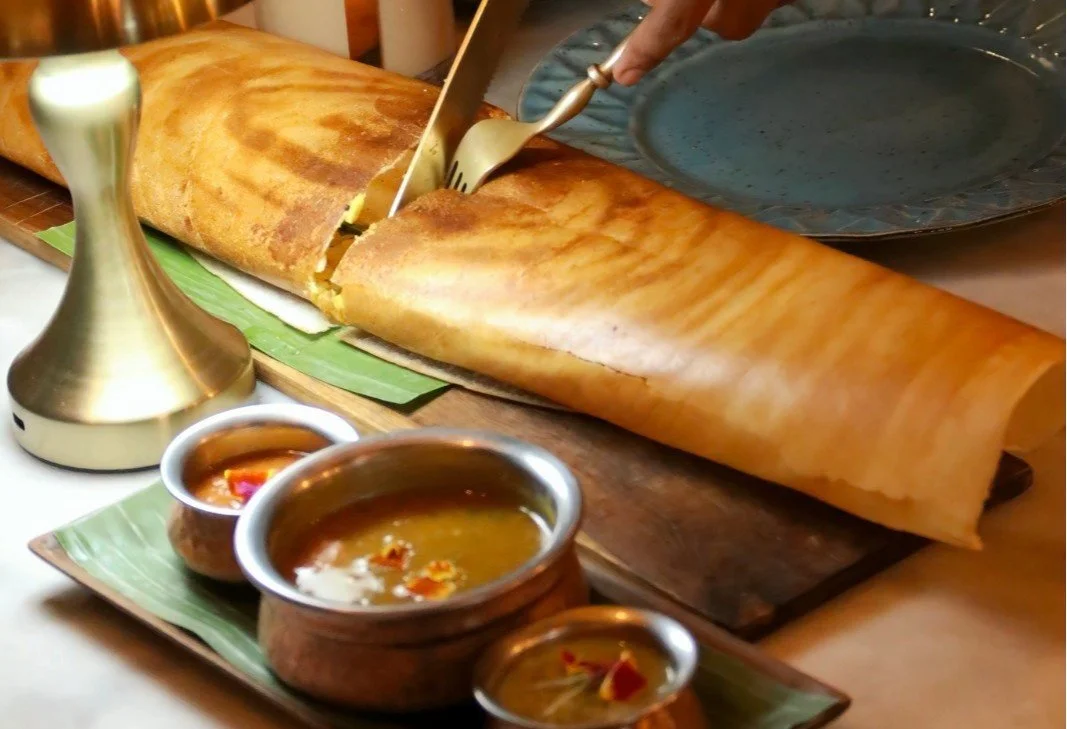
Many guests visiting an Indian restaurant in Ubud notice the dosa before anything else.
It's wide, golden, and crisp from edge to edge. Some guests even describe it as the biggest dosa in Ubud when it arrives at the table.
But the size isn't necessarily what makes it memorable.
What often surprises people is how light the dosa feels. And the answer has less to do with its size than with what happens to the batter long before it reaches the pan.
What Makes a Dosa Light and Crisp?
A good dosa isn't simply about spreading batter across a hot pan. Much of its character comes from the preparation that happens beforehand.
The process starts with a simple combination of rice, urad dal, and a small amount of fenugreek seeds. These ingredients are soaked, ground into a batter, and then left to rest.
At this stage, the batter may look simple.
The important part comes next.
Why Fermentation Matters in Dosa
Traditional dosa batter is fermented before cooking.
As the batter ferments overnight, its flavour and texture gradually develop. By the following day, it has a subtle tang and a different consistency from when it was first ground.
That fermented batter helps create the contrast associated with a well-made dosa:
crisp at the edges, light underneath, and delicate enough to break easily.
For diners discovering Indian food in Ubud, this is one of the details that makes dosa particularly interesting. Its character comes not from a complicated list of ingredients, but from the time and technique behind a relatively simple batter.
Fermentation Takes Time
Dosa batter cannot simply go from grinding straight to the pan.
Temperature affects how quickly fermentation progresses, which makes timing an important part of the preparation. In Bali's warm climate, the batter can ferment relatively quickly, so it needs to be monitored carefully.
Too little fermentation can leave the batter heavier than intended, while too much can produce an overly sour flavour.
Finding the right balance takes patience.
And that process begins the night before the dosa reaches your table.
Why Dosa Is Different from Many Indian Dishes
When people think about Indian food in Ubud, rich curries, naan, and tandoori dishes may be the first things that come to mind.
Dosa offers a different side of Indian cuisine.
A South Indian staple made primarily from rice and urad dal, dosa gets much of its character from fermentation and cooking technique rather than rich sauces or heavy seasoning.
The result is a dish that can be crisp, savoury, and light at the same time.
Rice, Urad Dal, and Fermentation
The combination of rice and urad dal gives dosa its distinctive batter.
After soaking and grinding, the mixture is left to ferment before cooking. This allows the batter to develop the flavour and texture needed for a thin, crisp dosa.
The ingredients may be simple, but the process is not something that can be rushed.
What Makes a Big Dosa Special?
Size is certainly the first thing you notice when a particularly large dosa arrives at the table.
But making a dosa bigger doesn't simply mean using more batter.
The batter still needs to spread thinly and evenly across the cooking surface. It needs to develop crisp edges while maintaining enough structure to hold together.
That balance becomes more challenging as the dosa gets wider.
Crispness Across the Dosa
A well-made dosa should have a satisfying contrast between its crisp surface and more delicate centre.
The consistency of the batter and the temperature of the cooking surface both matter. If the surface isn't hot enough, the dosa may not develop the desired crispness. Too much heat can cause it to cook unevenly.
So even a very large dosa still depends on the same fundamentals:
well-fermented batter, the right consistency, and careful cooking.
A Different Side of Indian Cuisine
For travellers exploring Indian food in Ubud, dosa can be an introduction to a style of cooking that feels very different from the rich curries often associated with Indian cuisine.
Its crisp texture and fermented batter show how much flavour and character can come from simple ingredients and careful technique.
The result may look impressive because of its size, but the real story is in the preparation behind it.
The bigger the dosa gets, the more important those fundamentals become.
The Dosa You See Starts the Night Before
By the time a dosa reaches the table, most of the important work has already happened.
The rice and urad dal have been soaked, ground, and left to ferment overnight. The following day, the batter is ready to be spread across a hot cooking surface and transformed into a thin, golden dosa.
It may look simple when it arrives, but several small details have to come together to get the texture right.
Getting the Fermentation Right
Fermentation depends on both time and temperature.
Bali's warm climate can help the batter ferment, but it also means the process needs to be watched carefully. The goal is to develop the right balance of flavour and texture without allowing the batter to become overly sour.
That's why the batter isn't treated as something that can simply be prepared whenever it's needed.
It needs time.
From Batter to a Crisp Dosa
Once the batter is ready, it is spread thinly across a hot cooking surface.
The batter needs to spread evenly, while the heat needs to be controlled so the dosa develops its characteristic golden colour and crisp edges without becoming dry.
When everything comes together, the final dish is remarkably simple:
rice, urad dal, fermentation, heat, and time.
More Than the Biggest Dosa in Ubud
Some guests remember the dosa because of its size.
Others notice the crisp edges, delicate texture, or subtle flavour created through fermentation.
For us, the size is only one part of the experience.
Dosa represents a different side of Indian cuisine, one built around patience, fermentation, technique, and simple ingredients rather than rich sauces and heavy flavours.
So while some guests may call it the biggest dosa in Ubud, what matters behind the scenes is everything that happens before it reaches the table.
At Pesona Lounge Ubud, it's one way we introduce guests to a lighter and distinctly South Indian side of Indian food in Ubud.
We don't really make the batter ready.
We simply wait until it tells us it is.
Frequently Asked Questions
What is dosa?
Dosa is a South Indian dish made primarily from fermented rice and urad dal batter. It is spread thinly on a hot cooking surface and cooked until crisp.
Why is dosa fermented?
Fermentation helps develop the batter's flavour and contributes to the texture associated with dosa.
Why is dosa crispy?
The crisp texture comes from several factors, including the fermented batter, its consistency, how thinly it is spread, and the temperature of the cooking surface.
Is dosa spicy?
Dosa itself does not necessarily have to be spicy. Its heat level depends largely on the filling, chutneys, or other accompaniments served with it.
Is dosa a heavy Indian dish?
Dosa can feel relatively light compared with richer, sauce-based Indian dishes. Its main ingredients are rice and urad dal, with much of its character coming from fermentation and cooking technique.
Where can I try dosa in Ubud?
Dosa is available at selected Indian restaurants in Ubud, including Pesona Lounge Ubud, where it is part of the Indian menu.