
the art of fermenting the dosa batter
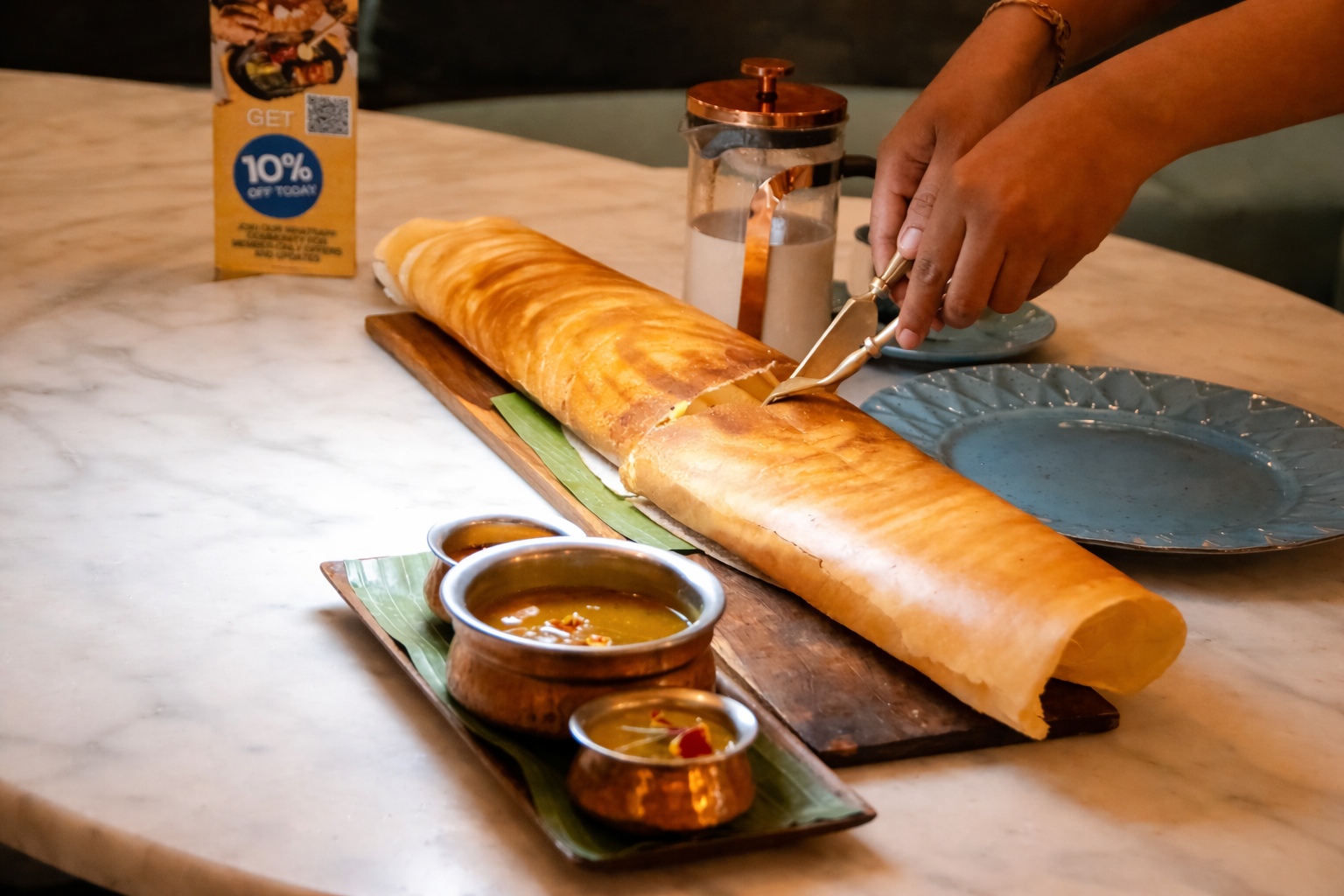
Many guests who visit us in Ubud ask why our dosa tastes lighter than what they’ve tried before.
Most expect the secret to be in the pan — the heat, the oil, the technique.
In truth, the real work happens the night before.
We soak rice and urad dal with a pinch of fenugreek seeds, following the same South Indian method used in homes rather than shortcuts often used in busy kitchens. Once ground, the batter looks simple and still. At that stage it isn’t ready to cook yet — it has to rest.
Overnight, fermentation slowly begins. Natural bacteria and wild yeast develop tiny air pockets and a gentle aroma. By morning the batter becomes lighter and slightly tangy, which is what gives a proper fermented dosa its texture: crisp when it hits the hot pan, soft underneath, and never dry.
Temperature matters a lot in Bali. The warm air actually helps fermentation, but only if the batter is balanced correctly. Too fast and it turns sour, too slow and it stays heavy. Getting that timing right is why traditional dosa preparation cannot be rushed.
Fermentation also changes how the body receives the food. The lentils break down, nutrients become easier to absorb, and the dosa feels light after eating — which is why in South India it’s everyday breakfast, not a heavy meal.
Many travelers looking for Indian food in Ubud first think about rich curries. Dosa is simply another side of the cuisine — lighter, simpler, and built around fermentation rather than spices.
We don’t really make the batter ready.
We wait until it tells us it is.